
"The GGR Foodball League:" Washington, D.C. Part 2
by Mike Lunsford, Editor-In-Cheese for GGR
Welcome back, friends! My little food/sports mash up project is back, and this time it’s personal! Side note, did you know that “and this time it’s personal,” was a Jaws 2 tagline? If you didn’t, you are now cursed with this knowledge as well. ANYWHO…we’re here to talk food and sports history! Let’s dive back in to my beloved Washington, D.C. area!
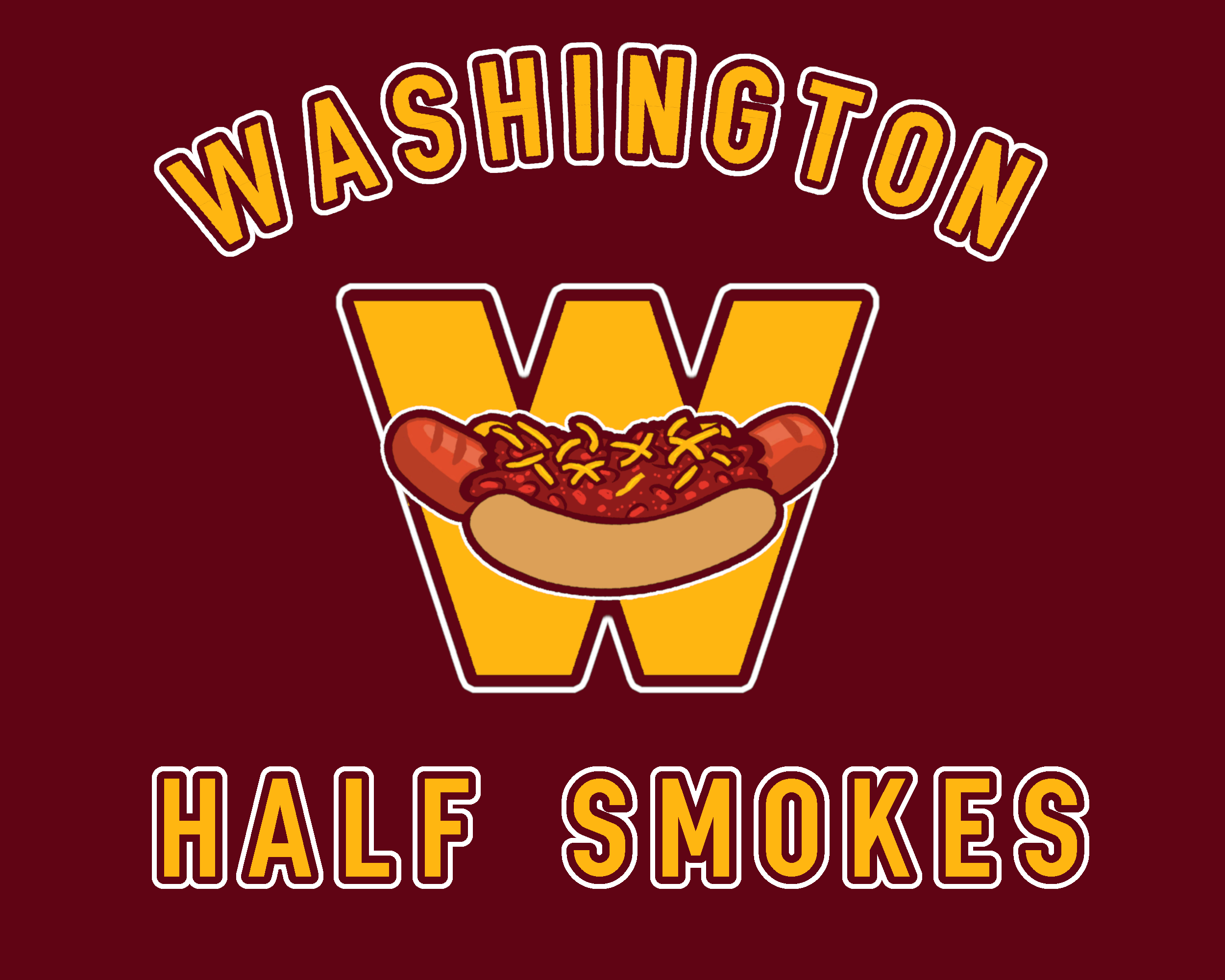
From the first incarnation of DC Foodball, we had two teams: the Half Smokes and Mumbo Sauce. Both iconic to the food scene and important parts of the history of the city/region.

However, there’s so much more. Let’s jump right in!
The Washington, D.C. area is a great place to get good, fresh seafood. It’s silly to think D.C. can stake any sort of claim on the most popular and well-know resident of the Chesapeake Bay in the Blue crab. Maryland has built its identity around it, and Old Bay was invented in Baltimore. We’ll just leave that one alone, lest we incite a bunch of dudes from Dundalk yelling at us with their over-enunciated “o’s.” I say this in jest as any time I hear someone sing the National Anthem at a sporting event, I miss when the crowd doesn’t shout “OH!” in that last line of the song.
Sure, the noble Blue crab is delicious and iconic but the Chesapeake holds another delectable shellfish: the oyster.
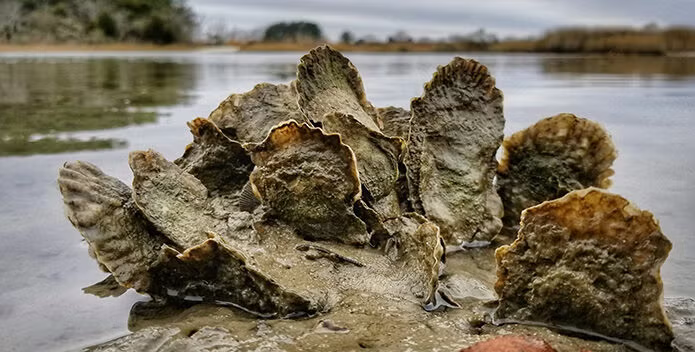
“Wait, you eat those rocks?” some might say. And technically, yes we do. Inside those shells are a deliciously salty little critter that some eat raw. I’ve had them raw. While I’m not a fan, I’m also not here to yuck anyone’s yum. They are also fried, grilled, used in soups and stews as the oyster is a versatile shellfish. But let’s stop talking about its edibility for a moment and discuss how important oysters are to this area and why.
First off, there is no Chesapeake without the oyster. The word Chesapeake derives from an Algonquian word meaning 'Great Shellfish Bay'. Additionally, due to oysters place in the ecosystem, without their filtration abilities and presence as a foundation species, the seafood-abundant Chesapeake Bay ceases to exist. The mollusks bunch together to create “oyster reefs” which just like their coral cousins are a provider of habitat for many other species and offer more surface area for life to cling to than just sand. It is said that when those pesky Europeans arrived here in the 1600s, the water was crystal clear because of the hard-working oysters. Captain John Smith wrote in his journal as he traveled up the Chesapeake that the oysters “lay thick as stones.”
As time went on and as industry be doin’, oysters were overharvested. This caused an ecological impact on the Bay as its crystal clear waters turned murky. A concerted effort to reestablish oyster beds in the Chesapeake was making a positive impact and many of the oysters people eat today are not harvested but farm-grown. And in spite of what oyster snobs may say, you can’t really taste the difference. They’re raised in the same waters after all, and it doesn’t negatively impact the population that is having a positive impact on the health of the Bay’s waters. OK, let’s see the tasty side of our filtering friends.
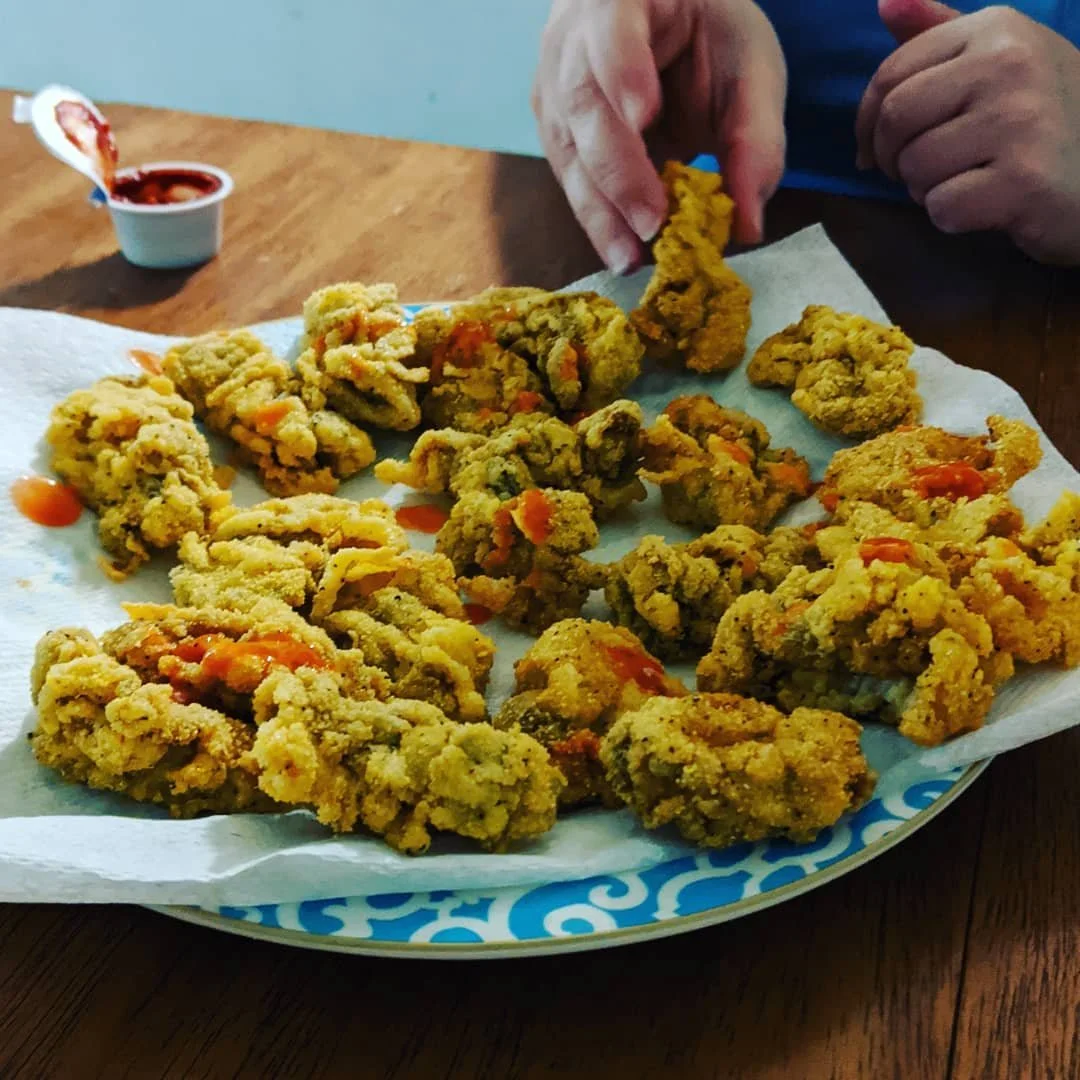
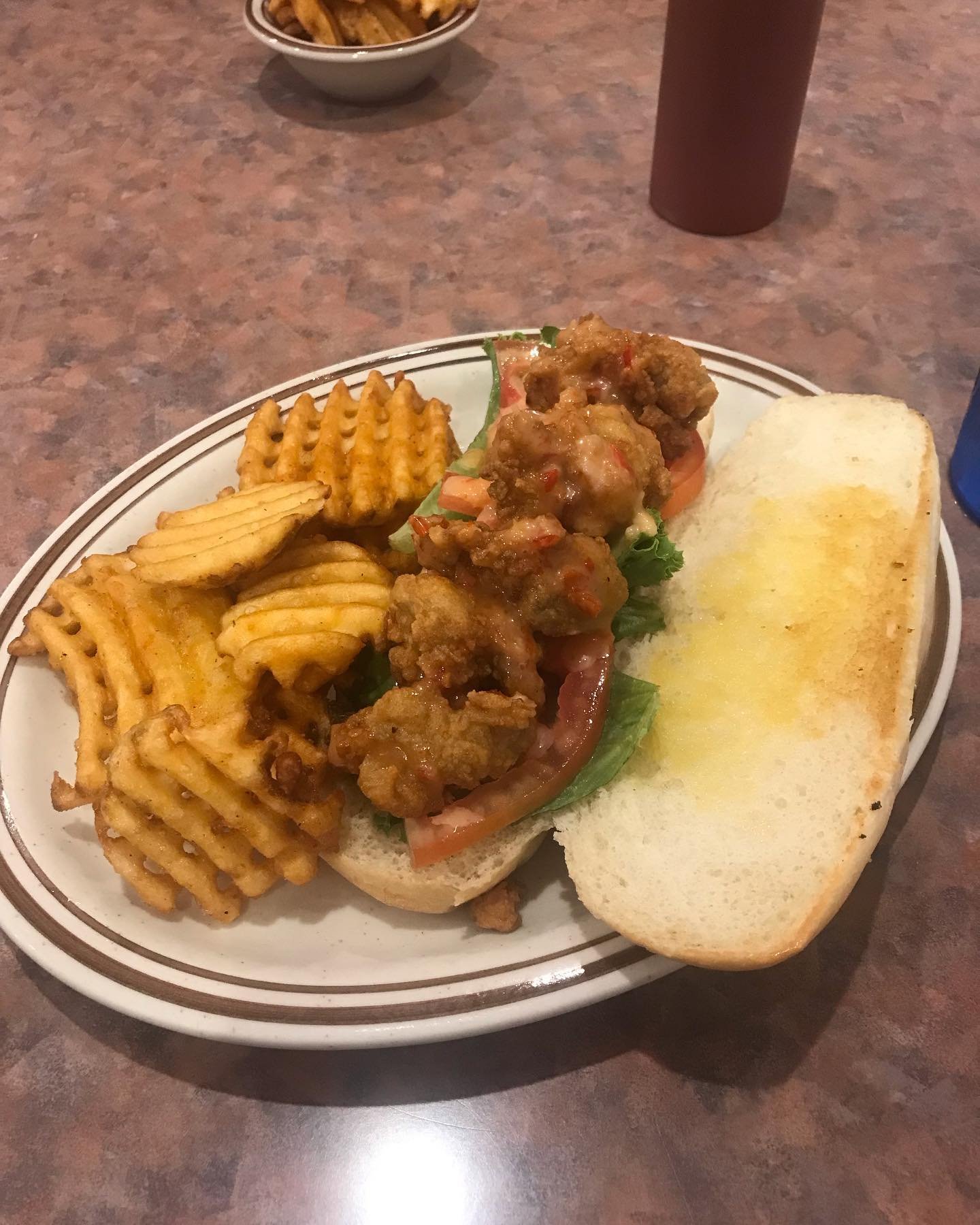
Pictured above you have fried oysters and an oyster po’ boy. As a Virginia native, these were locally grown, fresh oysters and boy are they tasty. The D.C. area is a great place for oysters. so with that being said…the next DC Foodball team is the Washington Oysters.
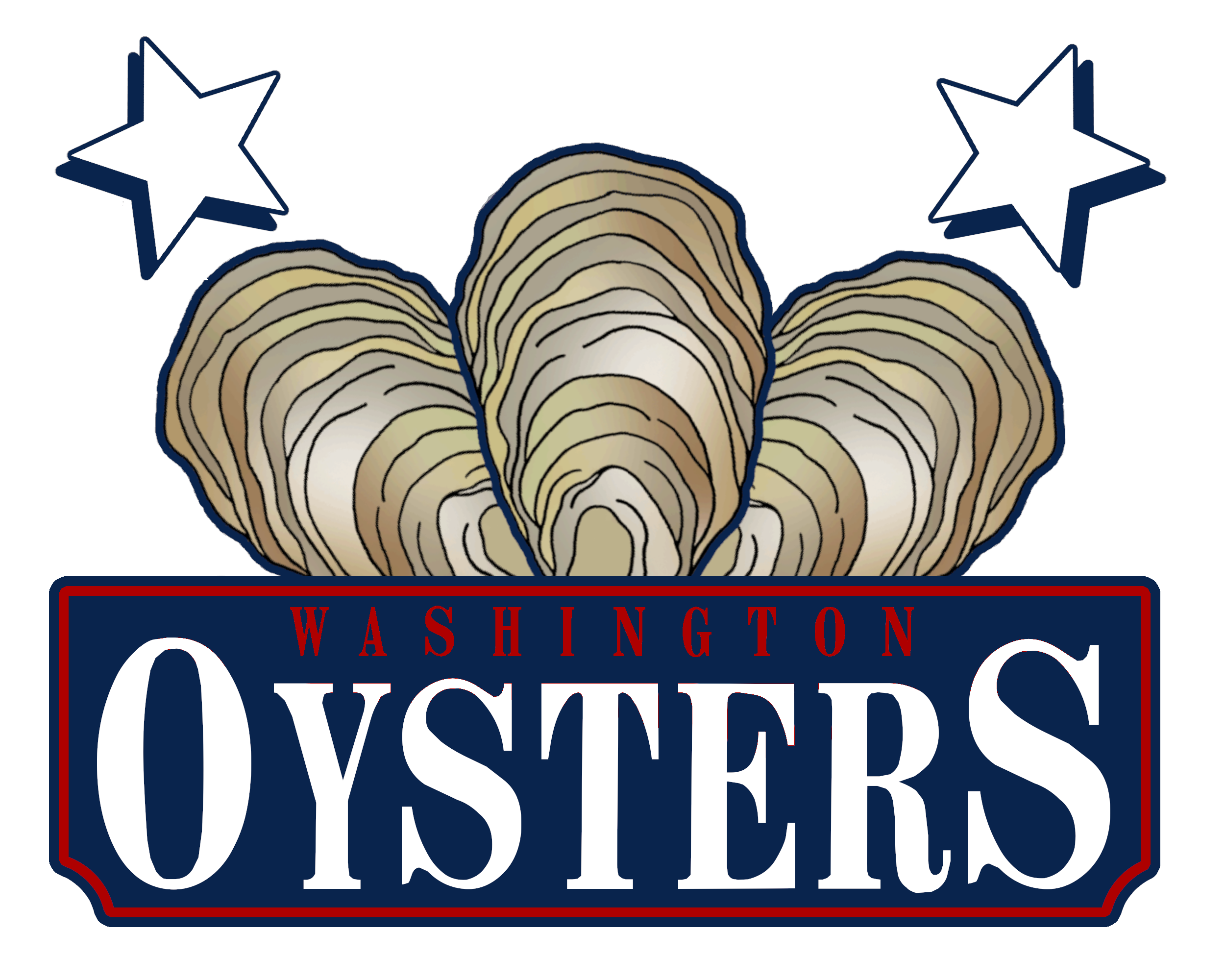

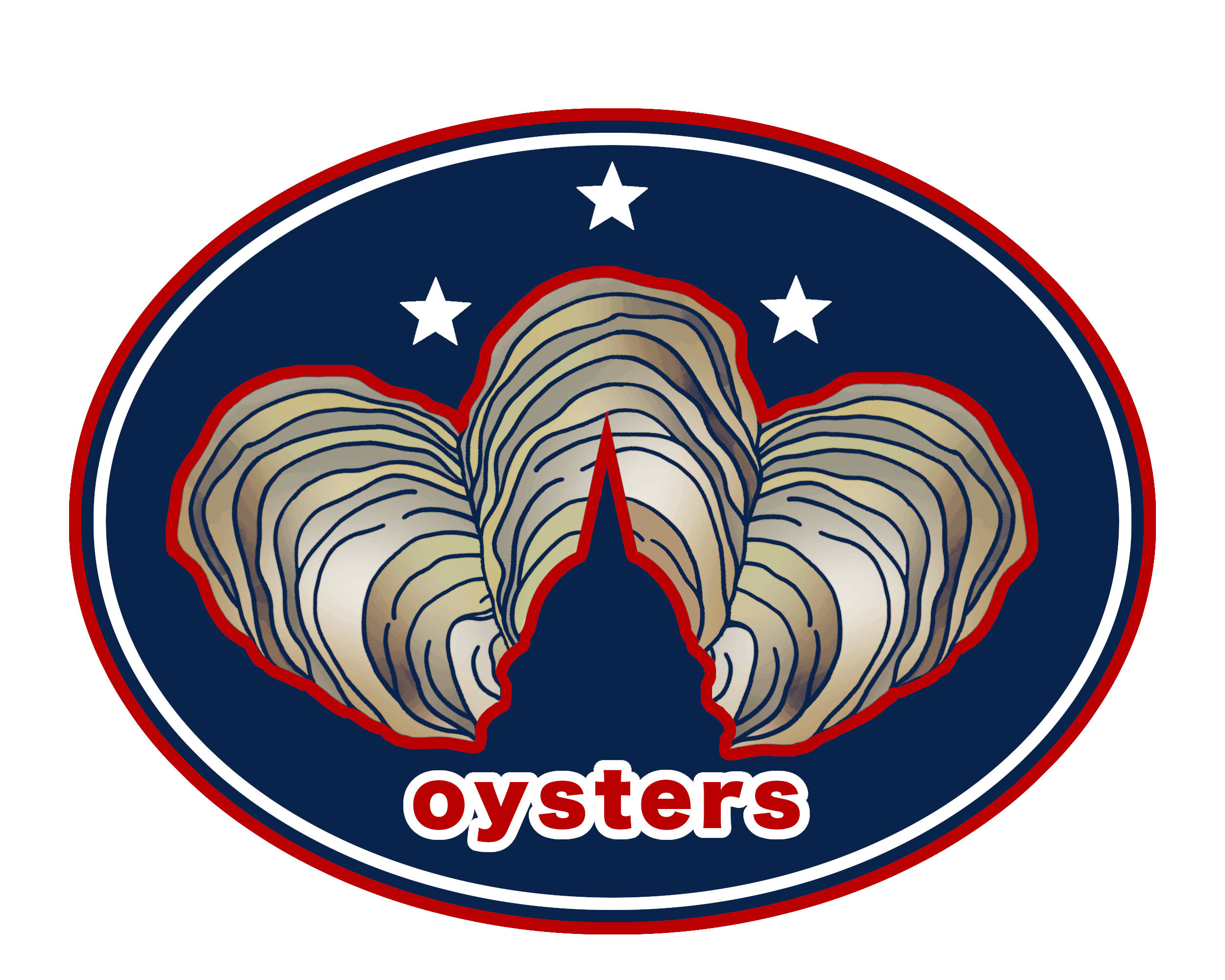
As promised, I leaned away from football logo inspiration for some of these new foods. My beloved Washington Capitals got some love on this one as I mashed up their logos. Is there some greater comparison or significance to the Caps and oysters? No. None that I can think of that wouldn’t be a ridiculous stretch. “They’re…tough…like the calcified shells of an oyster? OH, wait! If you crack them open they may have a pearl inside…sorry. I got nothing.” See? doesn’t work. MOVING ON.
Pupusas
As mentioned in my first D.C. foodball article, the D.C. area is home to a diverse group of people. Immigrants, transplants, those on military orders who choose to stay here and natives live next to one another and help create the uniqueness of the area. That diversity is what I love the most about this area. You grow up with people from all over the world, with different backgrounds, religions, cultures and customs and if you’re not a jerk, then you get to experience all of that.
One culture that has become a huge part of the DC metro area is the Salvadoran culture. We are unique in this area in that people from El Salvador are the largest demographic of our Latino population, the only area in the U.S. that can make that claim. During the 1980s when there was a civil war in their country, many Salvadorans immigrated and chose this area as home. This means we got to experience one of the most delicious Latin foods, the pupusa.
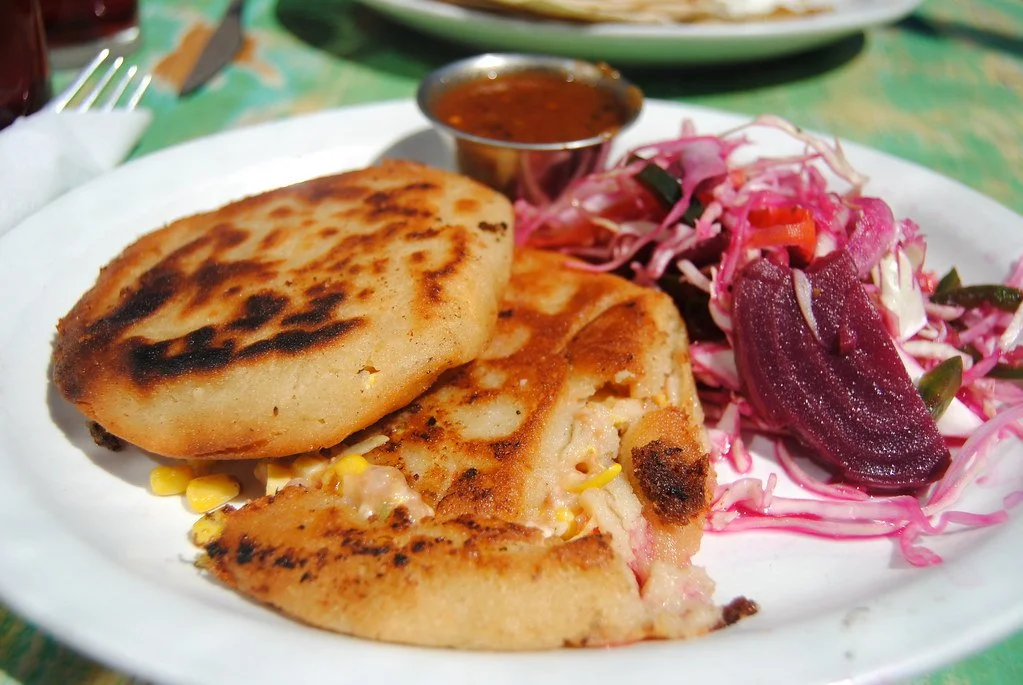
For those not in the know, A pupusa is a thick griddle cake or flatbread made with cornmeal or rice flour stuffed with one or more ingredients including cheese, beans, meats or vegetables. As seen above, the traditional way to serve a pupusa is with a curtido, the Salvadoran version of a fermented slaw, like kimchi or sauerkraut but made of cabbage, carrots, onion, lime juice and spices. A simple tomato salsa is also traditionally served with it.
Whether it’s a pupuseria or food trucks, the DC metro area has countless options to get delicious pupusas. So, that being said I am very happy to include pupusas as part of the Washington Foodball Team’s identity. I mixed it up, using the MLS team for DC as reference, and Nationals, DC’s baseball team as well!
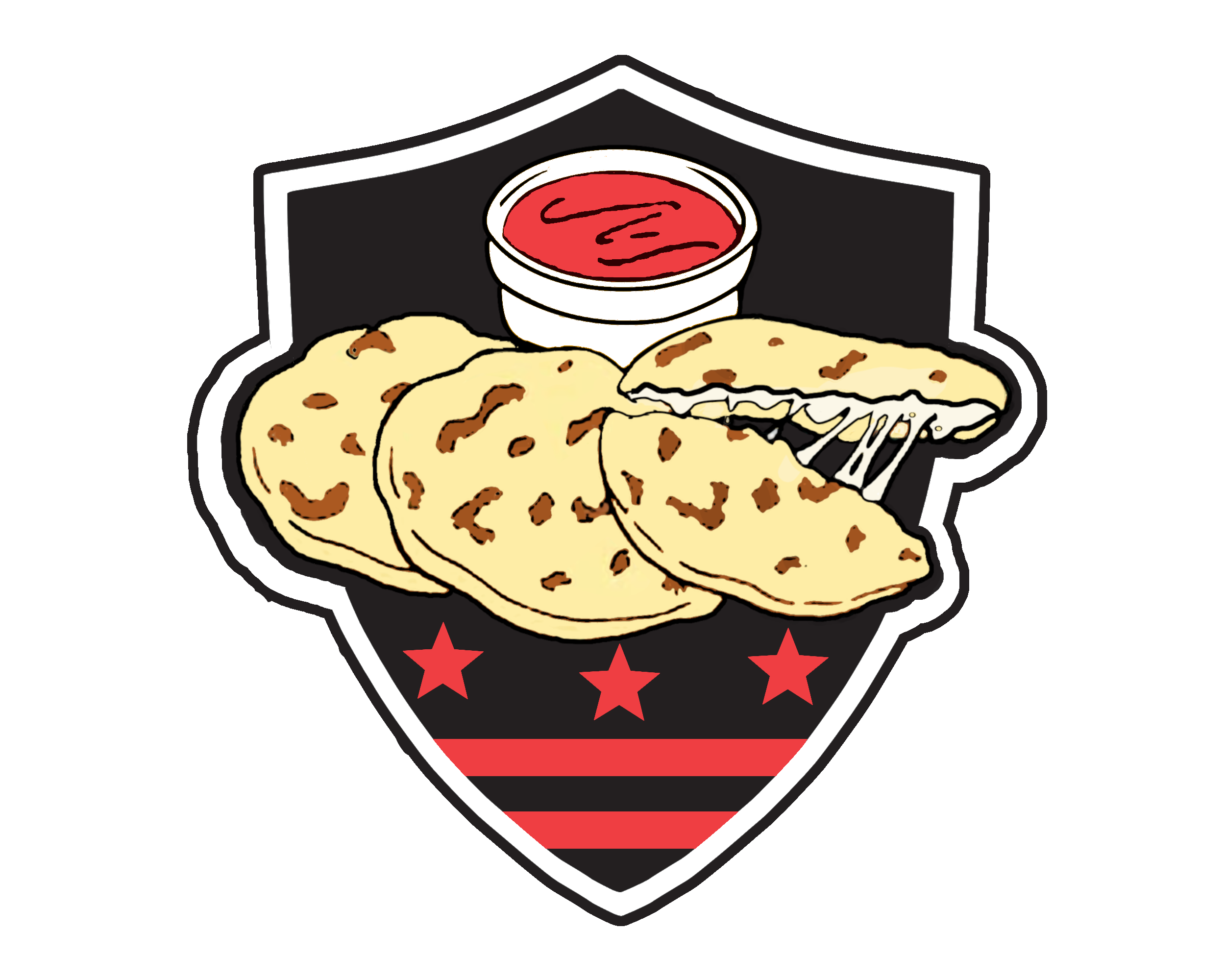
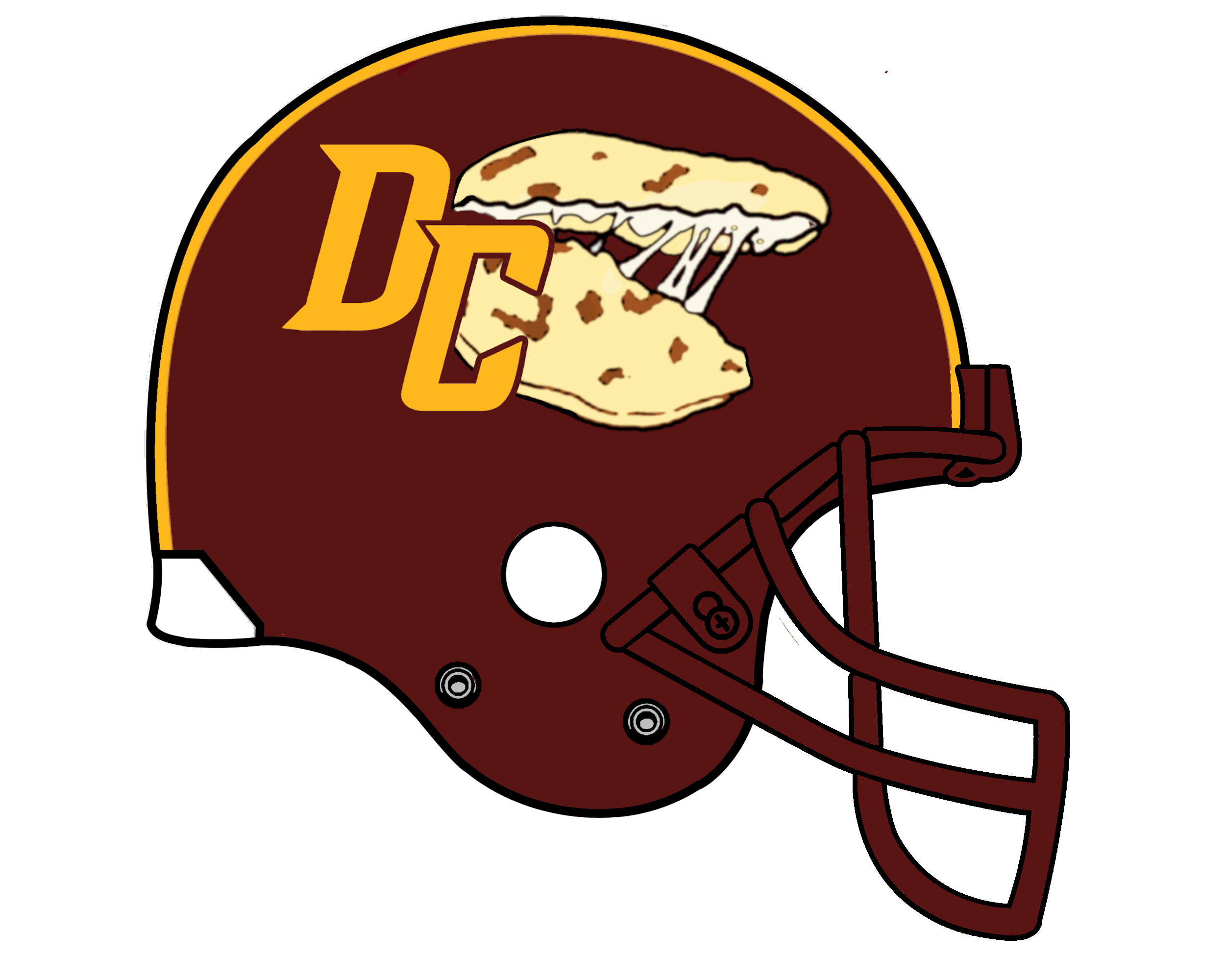
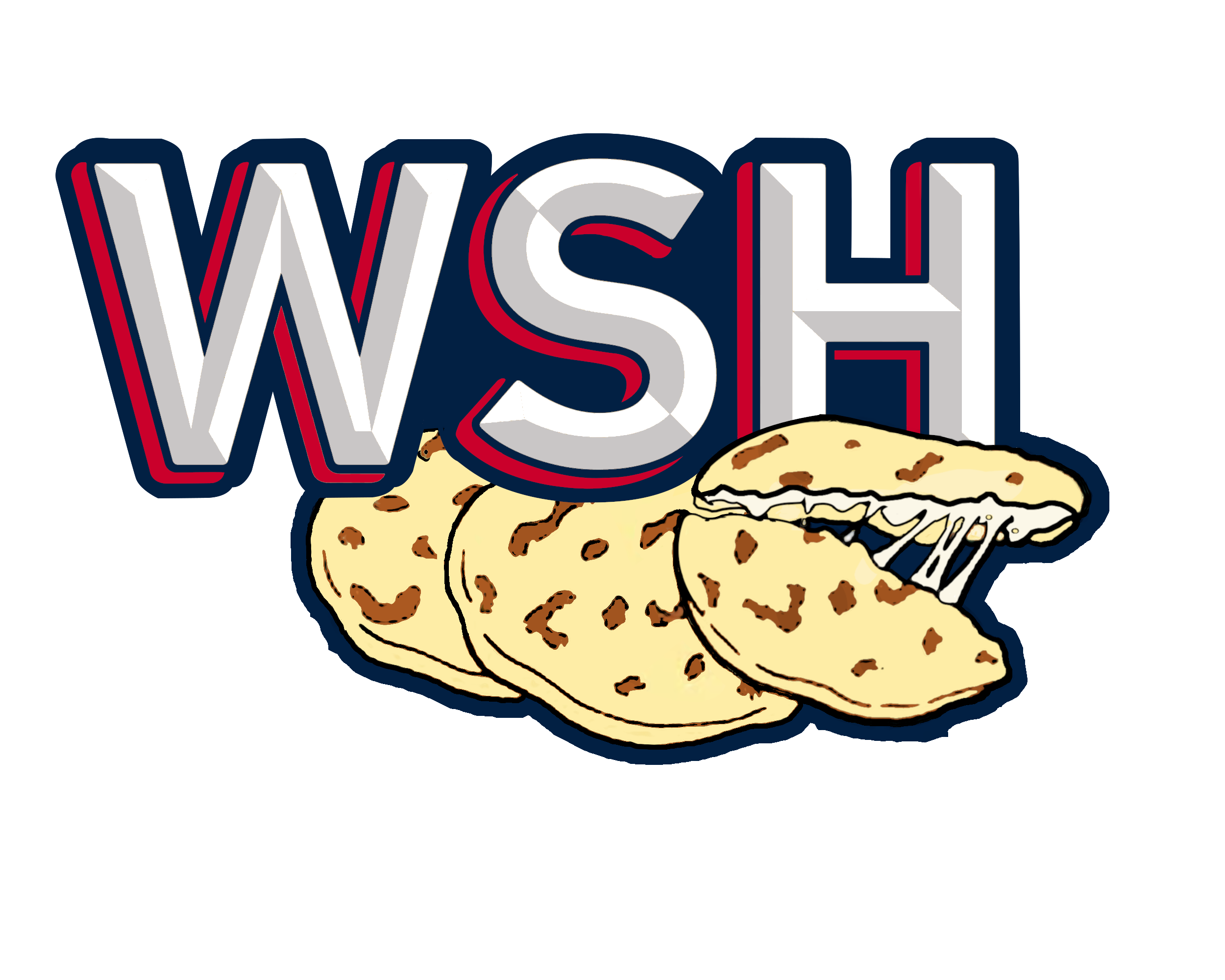
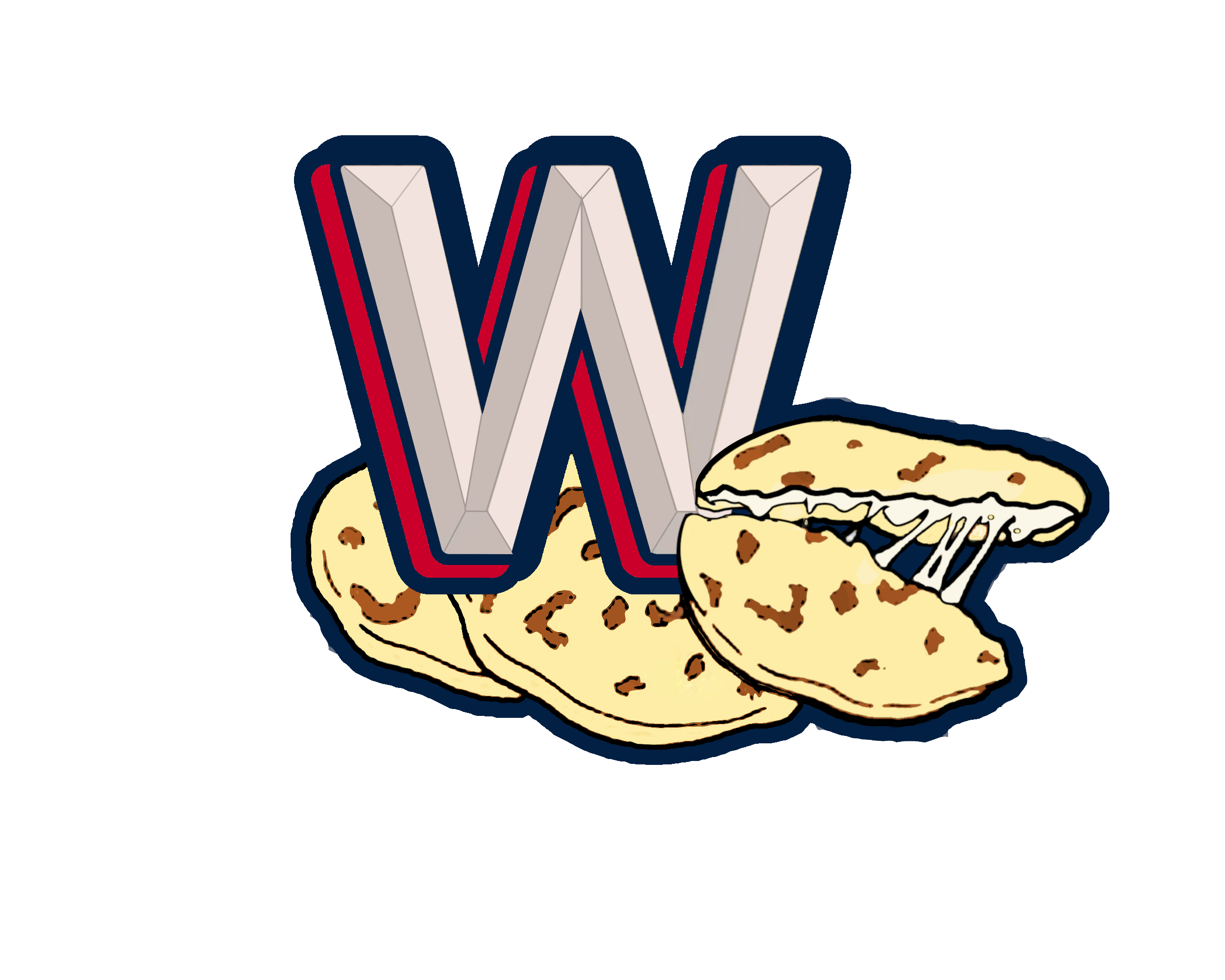
Click on the link below to get these logos on stickers, t-shirts and more!

For the stickers we have for sale on Redbubble, click on the picture!
You can call me a lot of things, shameless self-promoter is one of them. I’ll continue to post my food history journeys as I share more of these “Foodball” mash ups. I hope you enjoy reading about and seeing my creations as much as I have enjoyed making them.
Mike makes a return trip to Philly to discuss more iconic food!